

Advert one
Hello, Broke, and At the Silence reveals a writer of deep empathy and strong observation. Exploring modern disquiet—loneliness, moral decay, mental struggle, and fleeting peace—with striking emotional honesty. The voice is distinctly humanistic: both critical of society’s failures and compassionate toward its victims. Stylistically, you blend plainspoken rhythms with lyrical depth, which makes your poems accessible yet profound.
🎙️ Discover the Poetry of Ben Robinson
Step into a world of reflection, emotion, and truth.
From the quiet heartbreaks of everyday life to the vast meditations on society and the soul, Ben Robinson’s poetry speaks directly to the heart.
With thirty published books of poetry, it captures the modern human condition—its pain, its passion, and its beauty—in language that resonates long after reading.
Read. Reflect. Remember.
Visit www.poetry247365.com
and explore the poetry that critics call “compassionate, courageous, and timeless.”
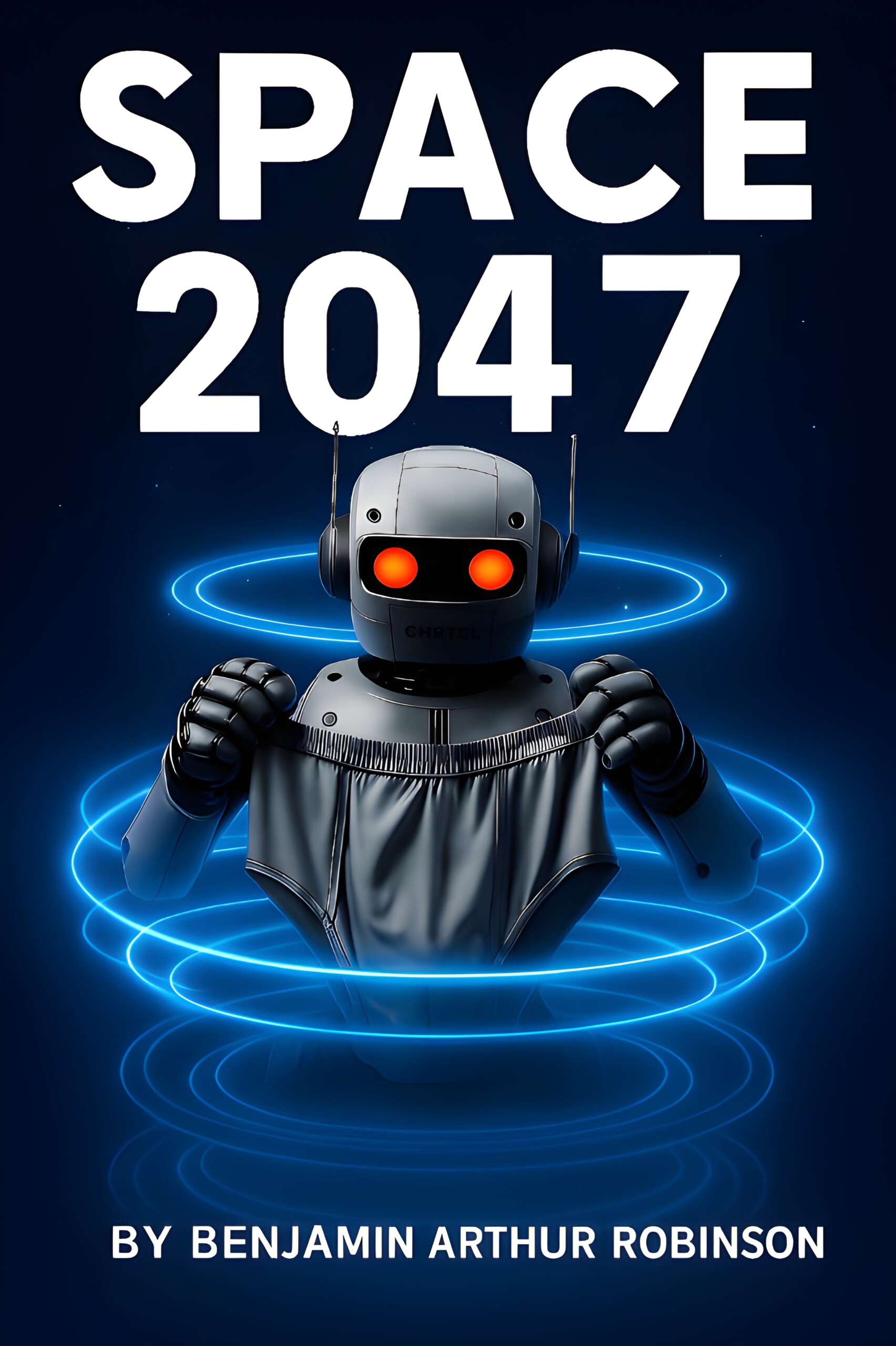
“Space 2047” is a wildly inventive, darkly comic, and philosophically charged sci-fi odyssey that expands Benjamin Arthur Robinson’s creative universe far beyond the frontiers of his poetry. Set in a future both absurd and alarmingly recognisable, it follows a misfit crew adrift in the endless boredom of the cosmos—lost, eccentric, and yet unmistakably human.
From its opening scenes aboard the spaceship Are We There Yet?, Robinson’s signature humour and moral curiosity intertwine. His cast—Brian the self-serious dreamer, Salomina the beautiful chaos, Cedric the misguided romantic, Karen the accident-prone telekinetic, and even Gertrude the cross-dressing cleaning robot—form one of the most entertainingly dysfunctional ensembles in contemporary speculative fiction. The result is part satire, part cosmic farce, and part social allegory.
Beneath the laughter, Space 2047 explores timeless themes: isolation, absurdity, moral failure, and the quest for meaning in a mechanised age. Robinson’s wit often borders on the philosophical—his jokes, like Vonnegut’s or Adams’s, carry the weight of empathy beneath their surface chaos. Every absurd situation—meteorites with advertising slogans, sentient sandwiches, or space rabbits with headlights—masks an existential truth about humanity’s capacity for both brilliance and idiocy.
Stylistically, the novel blends theatrical comedy with poetic precision. Robinson’s sentences sparkle with rhythm and inventiveness, his dialogue as much about timing as tone. The humour is irreverent but never cruel; the moral compass, as always in his work, points toward compassion and redemption, even in galaxies gone mad.